About MyDiji
In spring 2022, Jeff Starr came back. I had worked with him on Broker2Broker, and now he and Amit Duvedi, his co-founder at Growth Accelerators, had a new product idea, then code-named Airlock: a digital assistant that stands between a manager's calendar and the flood of sales outreach aimed at it, screening every pitch and letting through only the ones that could actually help.
This was during a time when the idea of "AI agents" hadn't quite taken off yet, but they could already see the future with them. This was before ChatGPT was released, after all! Even though I had seen demos of GPT-3 already, I was skeptical that an AI would be intelligent enough to do all this. In retrospect, they were so ahead of the curve!
There was no product yet, but that was the point. Before building anything they wanted a concept video, about two minutes of animation, to put in front of buying managers and investors to see who was even interested. They wrote the script themselves, in character, as a conversation between a manager, Dan, and his assistant.
There was only one problem: I had never made an animation more than just a few-frame gif. I told them so. They hired me anyway, insisting that I was a creative thinker and the perfect person for the job, so I budgeted extra hours for the fact that the animator was also the student.
Storyboarding
The script they created was very high level; they had strong ideas of visual motifs they wanted portrayed, but not a throughline of exactly how we got from motif to motif. For example, they wanted to drive the point home that modern work involves being inundated with notifications and alerts that no one can reasonably keep up with. So they imagined a man sitting in a chair getting bombarded by mail and bells out of his computer to the point at which he falls out of his chair. But what exactly brings him back up from his chair and how we illustrate him learning about the better way were a little more unclear.
So every scene started on paper. I storyboarded the founders' script frame by frame, with margin notes about how to make the suggested motifs work or why I thought they wouldn't work (e.g. "I took the river out b/c I don't think it illustrates the frustration").
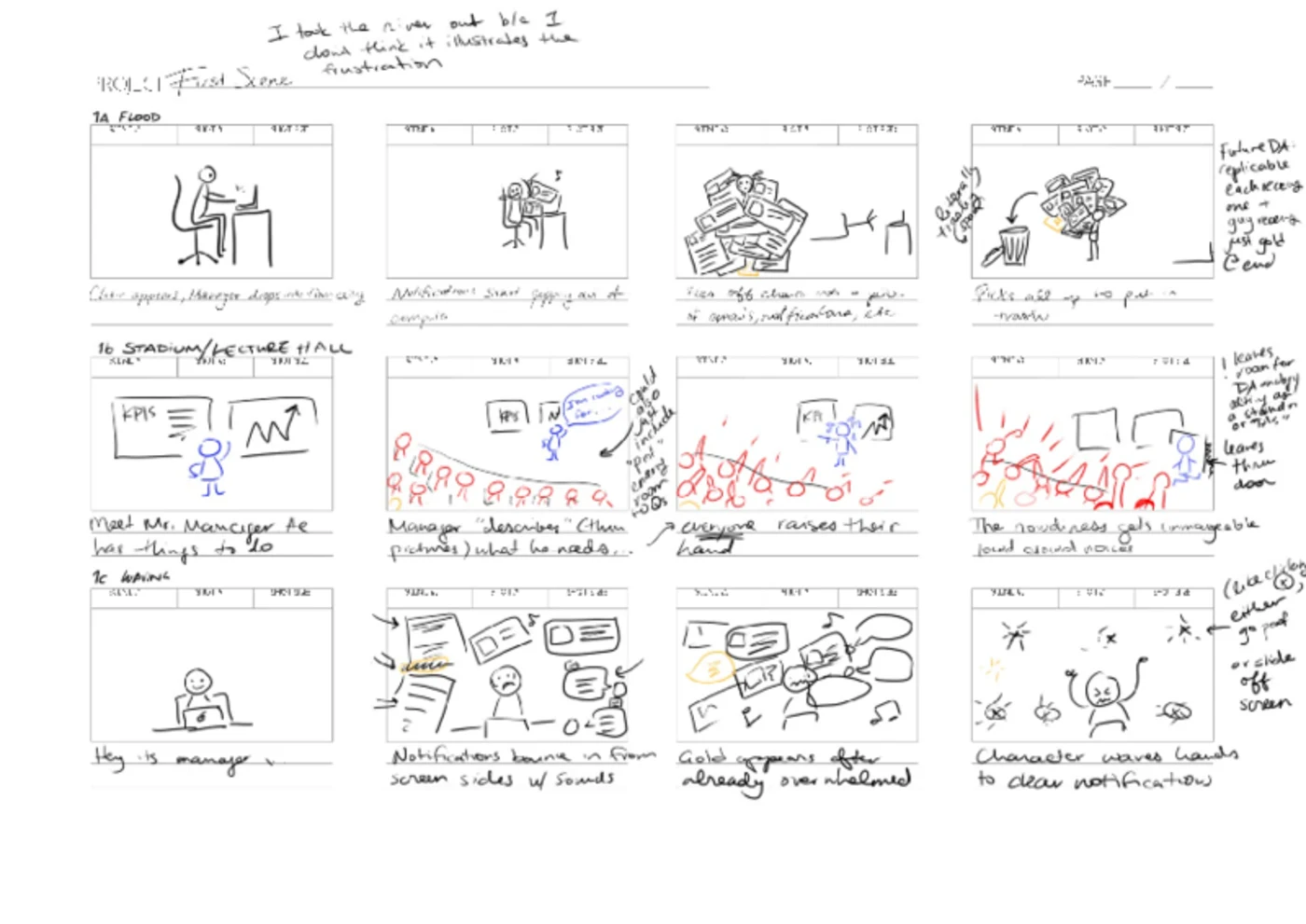
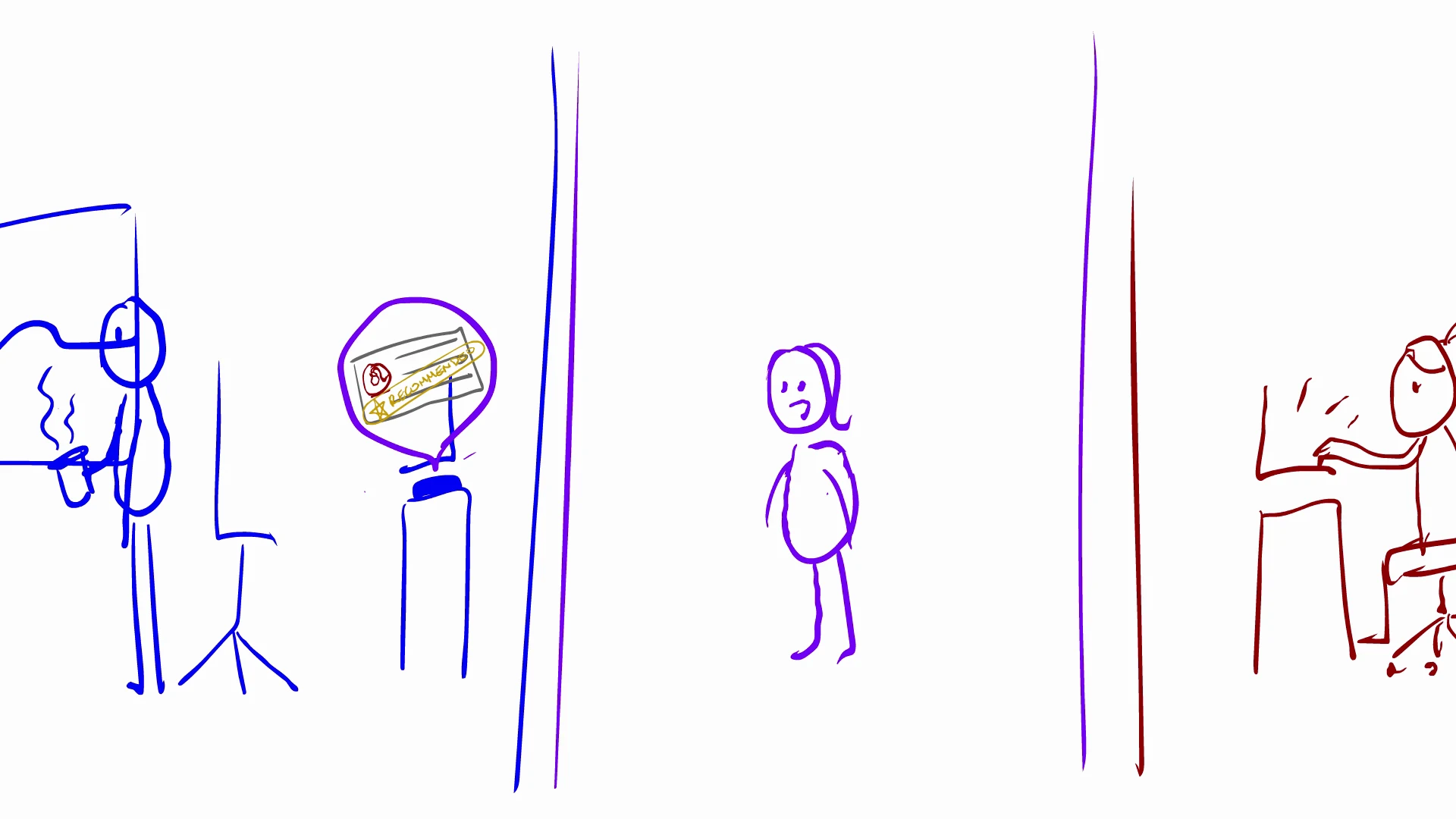
From the boards I cut animatics, which is a generous word for what I privately called stick-figure land. The 44% of sales reps who planned to quit their jobs appeared as an army of identical red stick people. But stick-figure land is where the timing came right, and the compositions built there survived all the way to the final film.
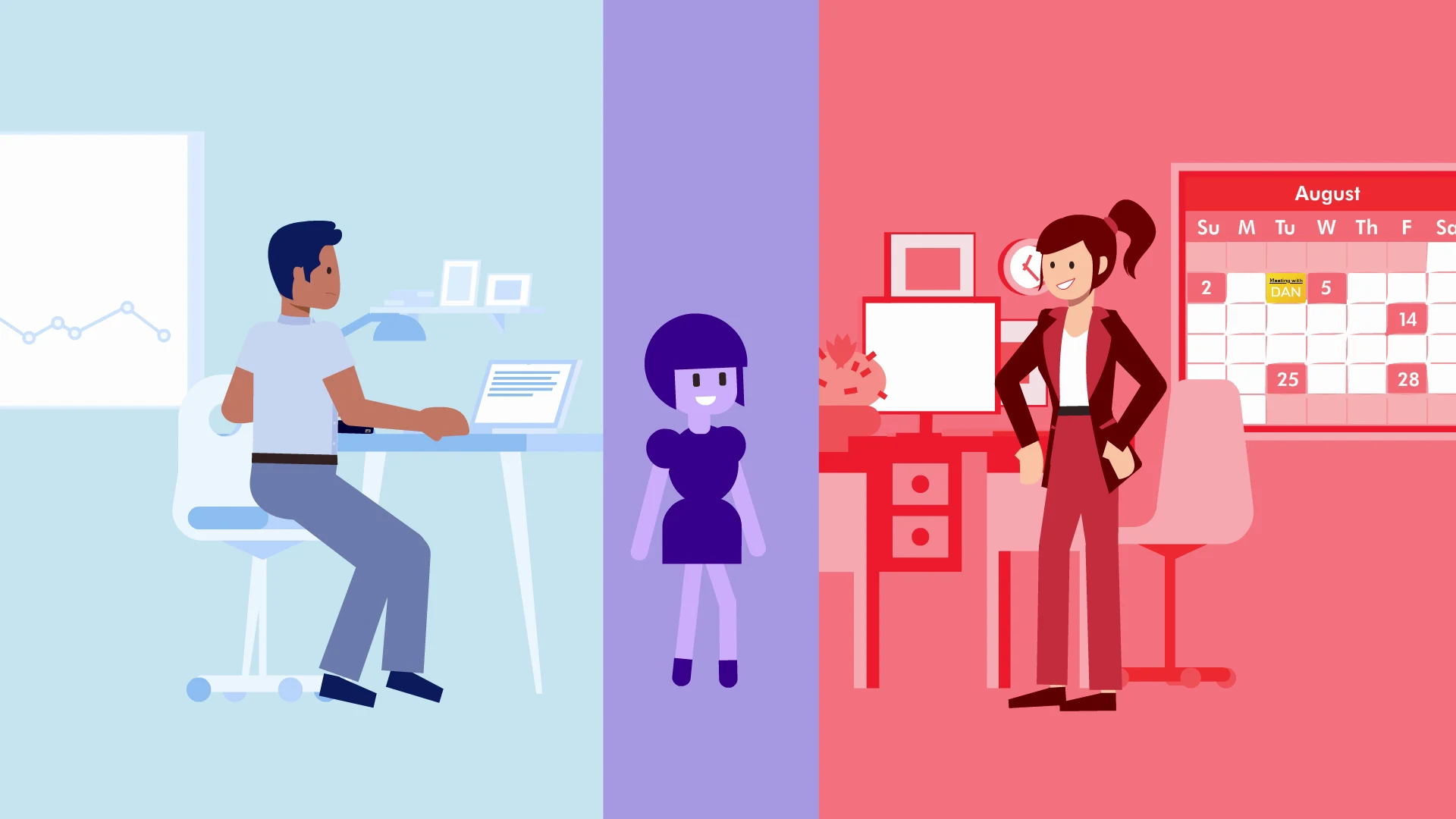
| The animatic | The film |
|---|---|
 |  |
Between those two extremes lived a medium-fidelity pass, which I used to test motion on real artwork before committing to full scenes:
A world in three colors
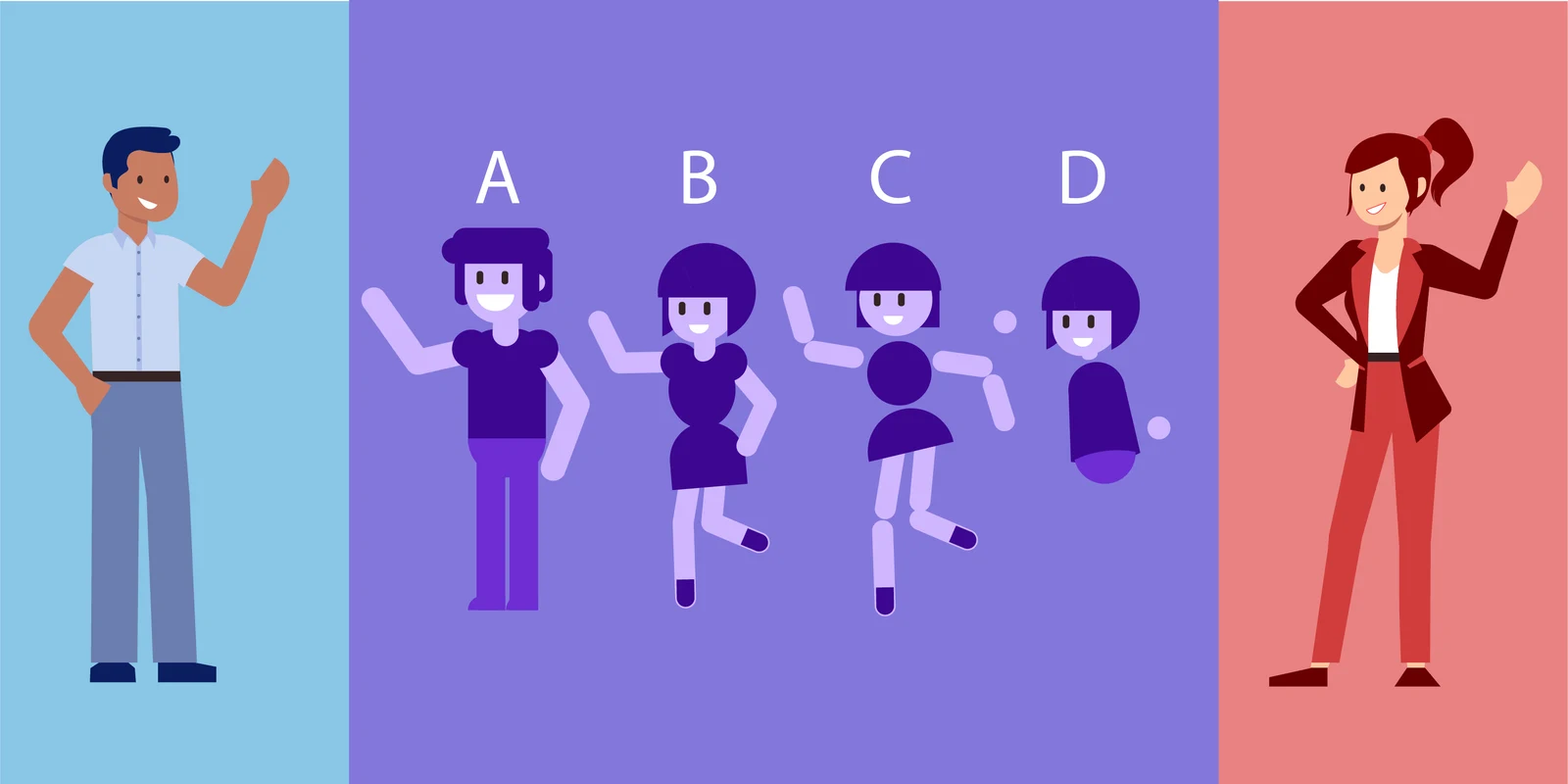
The film's world is a split screen. Managers live on the blue left, sales reps on the red right, and the digital assistant is purple, in the middle, made of both. Every character is drawn in shades of their side's color, so you always know where you are even when the camera doesn't say so.
I auditioned four illustration styles for Jenn, the sales rep, ordered by how hard they would be to animate, with licensing notes attached (two were original, two built on templates that would need licenses if the video ever went public). Style B won. Jeff's review: the square hairline and eyes say "digital."
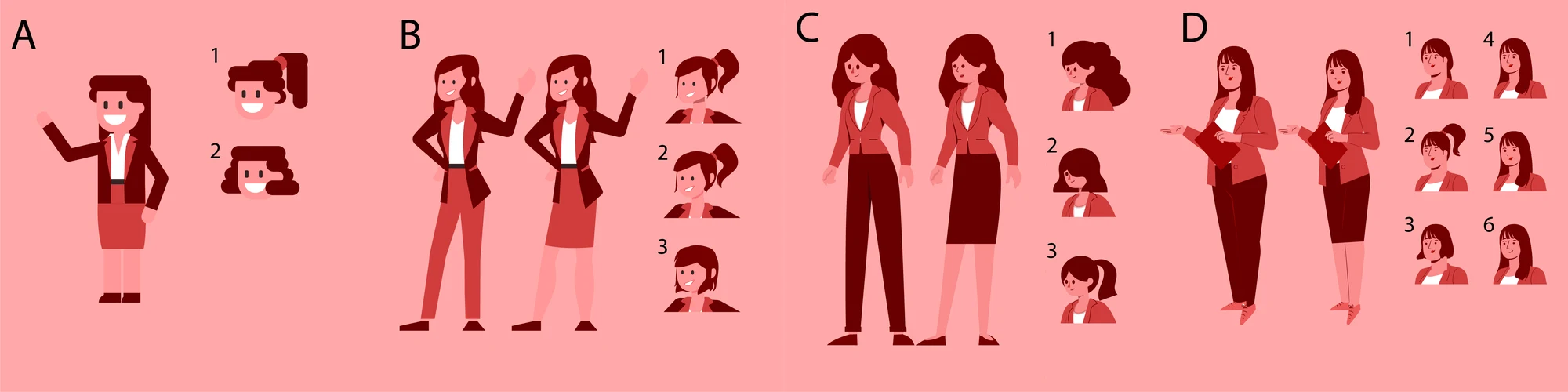
Style C and a handful of the background pieces came out of Stubborn Constructor, a Figma community kit you assemble illustrations from. None of it survived into the final art, which I drew myself, but it was so useful for storyboarding and getting an idea across fast before anyone had to commit to it.
The assistant took another round. Purple skin alone still read as human, so she lost her knees and elbows and became something simpler and springier than the people around her. My pitch in the email thread: "I'm still like a human, but I am not a human, but I'm super accessible and adorable!"
Focus group feedback
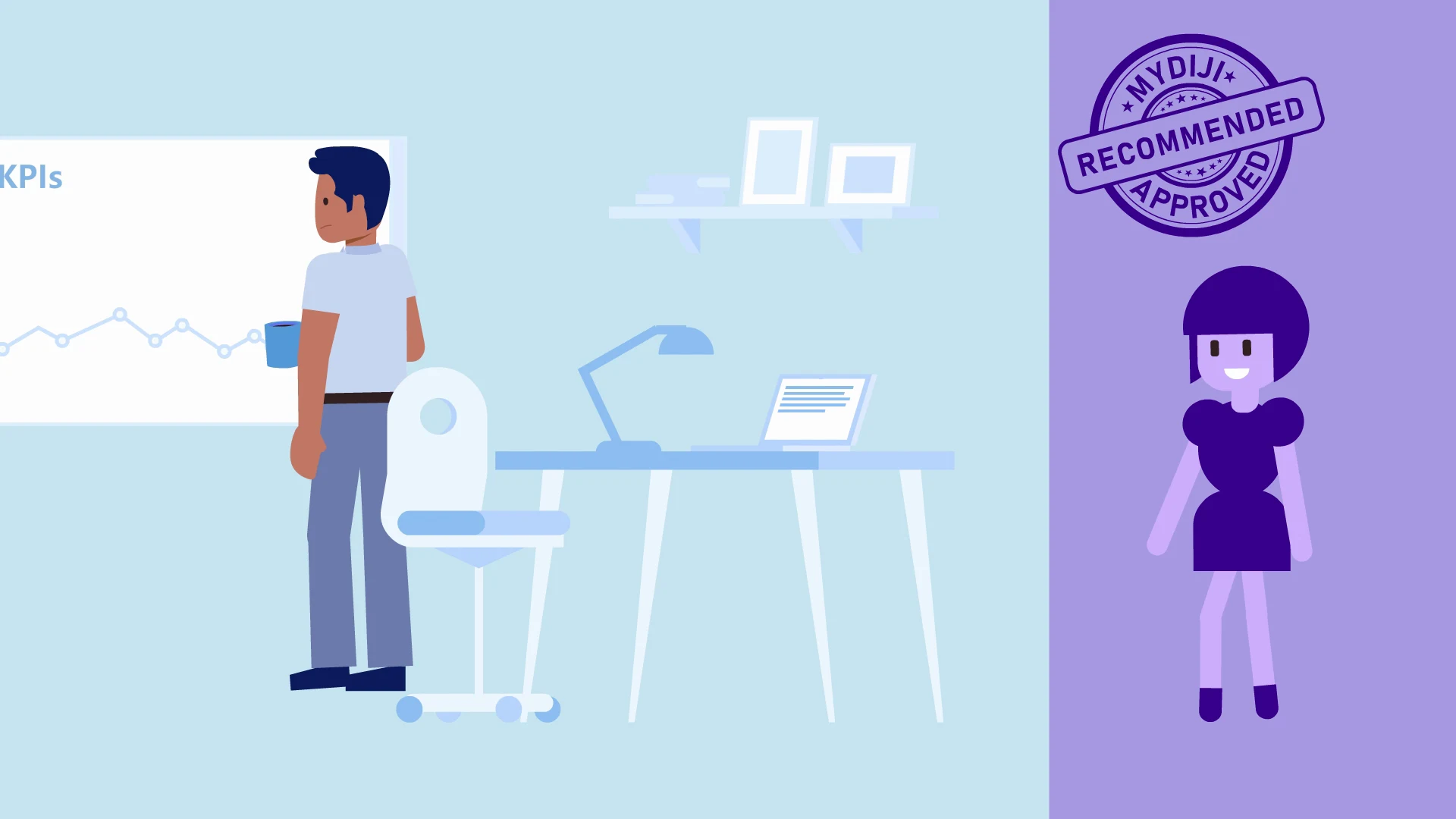
Jeff and Amit played the video several times in small focus groups of friends and colleagues. Those focus groups changed the film twice. First, they couldn't keep Jenn and the assistant, then named Laurie, straight ("Don't name her. Just call her 'mydiji.' She's his diji. Why name her?"). So Laurie lost her name, and the "Laurie Approved" stamps in the film became "Diji Approved."
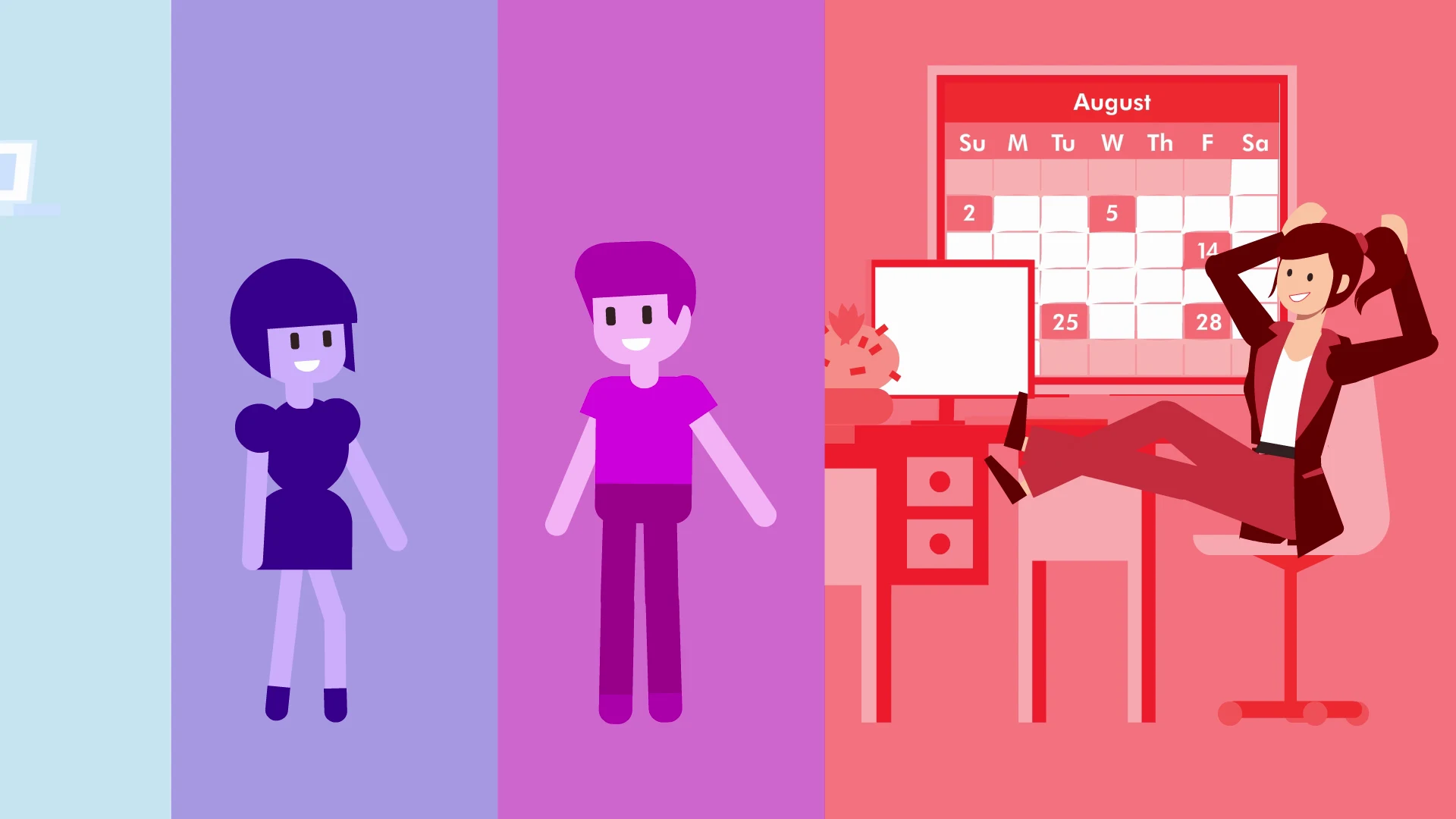
Second, they pointed out that a female assistant serving a male manager carried a whiff of the robo-secretary. The script answered with a post-credits scene: Jenn gets a diji of her own. He also remained nameless but is forever known as Charlie in my design files.
The product name found itself
Halfway through production, the product outgrew its code name. A July meeting landed on "My Digi," which turned into mydiji almost immediately: the j pins down the pronunciation (/maɪˈdɪdʒi/, as in didgeridoo, not "dig-ee"). I got so excited I sent six rounds of logo sketches that same afternoon, in a thread that escalated from "Let me know what you think of this direction!" to "OK NOW IS THE LAST ONE FOR REAL." The mark that stuck spells the name in the film's three colors and gives the letter dots little faces.
One of those dots winks at you as the film ends. The wink has its own sound effect. The name Airlock appears nowhere in the finished film.
Sound from a cold tweet
The client knew that they wanted a voiceover and had a specific type of voice in mind. They delegated finding the voice actor to me.
I put out a call for voice actors on Twitter, presented the three best demo reels to the founders, and the unanimous favorite was Annamarie Yang, whose explainer-video demo was exactly the register the script needed: warm, capable, lightly amused.
The rest of the sound is foley from the real thing. The spam avalanche that buries Dan is built from actual LinkedIn, Outlook, and iPhone notification sounds layered on top of each other, so the animated manager's worst day sounds uncomfortably like every real-life manager's Tuesday.
Ten weeks, start to finish
I delivered the final cut on August 5, 2022: two and a half minutes at 1080p, with storyboards, animatics, character rigs, and source files handed over in an organized drive. Two weeks later Jeff reported the video was already doing exactly what it was made for, getting the product idea in front of people and bringing feedback home.
It was my first client work in Adobe Animate, sold honestly as such, and the client loved it anyway. A month after delivery I moved to New York for grad school, where the first class on my schedule was called Hypercinema, a class about storytelling through time-based media, whether animation, film, or interactive experiences made via web or game engines.
That timing felt like a wink too.