The prompt
This project was for my grad school class Designing the Absurd, the same class that I later made the Floordozer and the Ice Bucket Diffuser for.
The prompt: to make a chindogu phone add-on. That is, device that is powered by the port on your phone and solves a problem, perhaps poorly or by creating more problems. If you need a refresher on what a chindōgu is, I went deep on it during my Floordozer project for this same class: an "unusual tool" that solves an every day problem most can relate to but often creates more problems while doing so.
I partnered with my friend Elif on this one, our idea: a device that plugs into your phone's USB-C port to power a lipstick applicator.
I mean, who hasn't been in a rush somewhere and needed help with their makeup on the way?
Finding the form
Prototyping with what was around
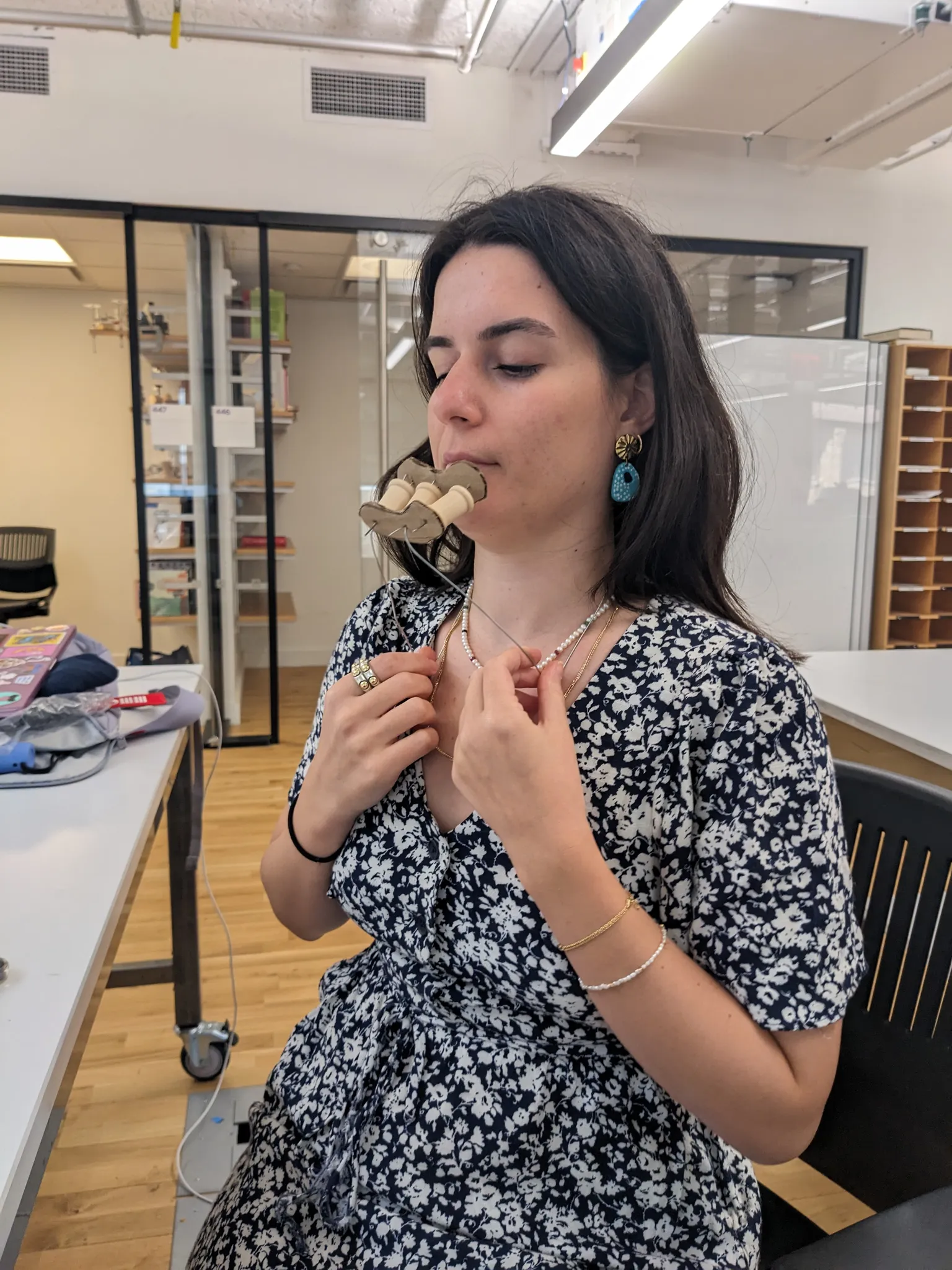
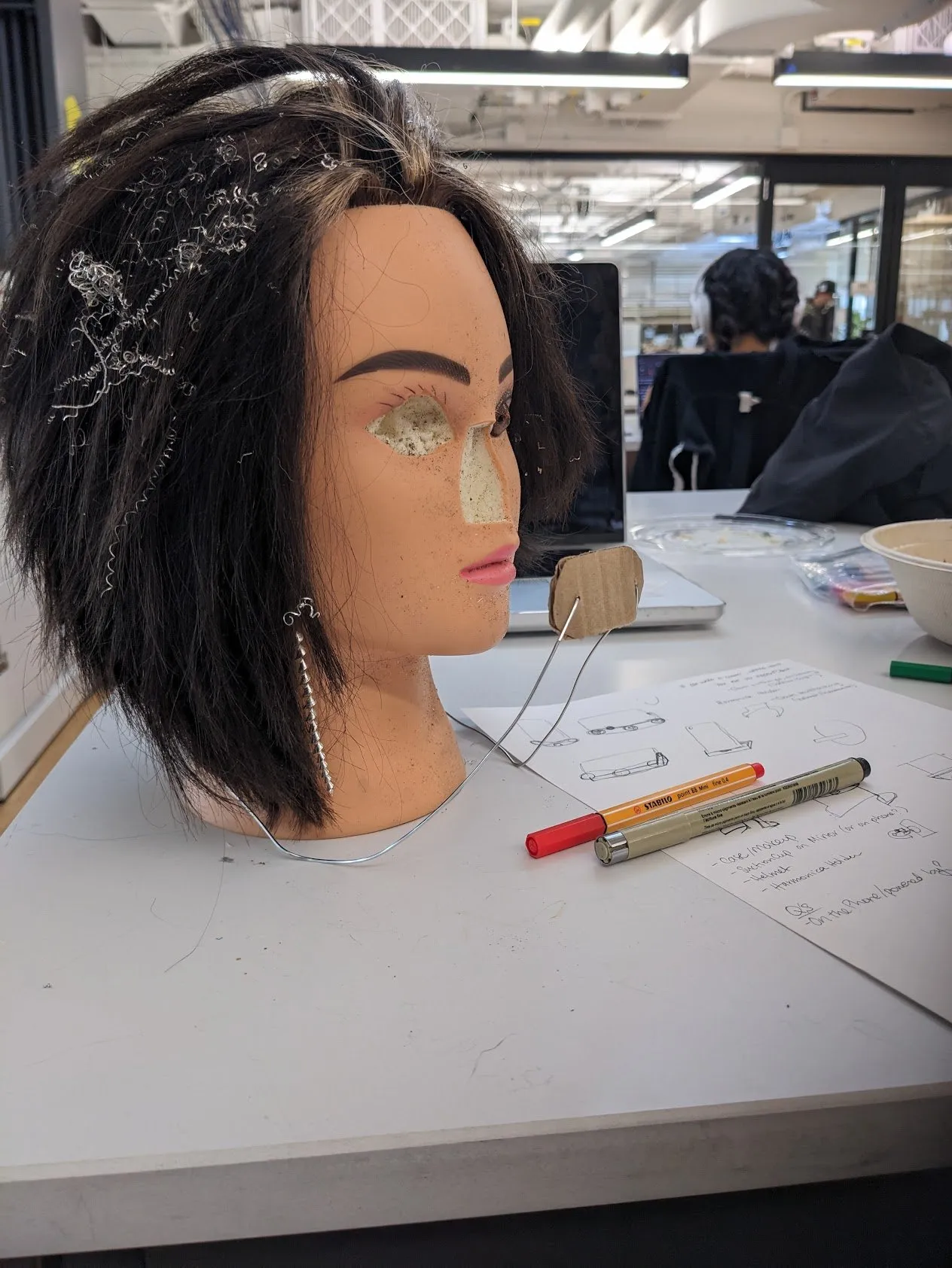
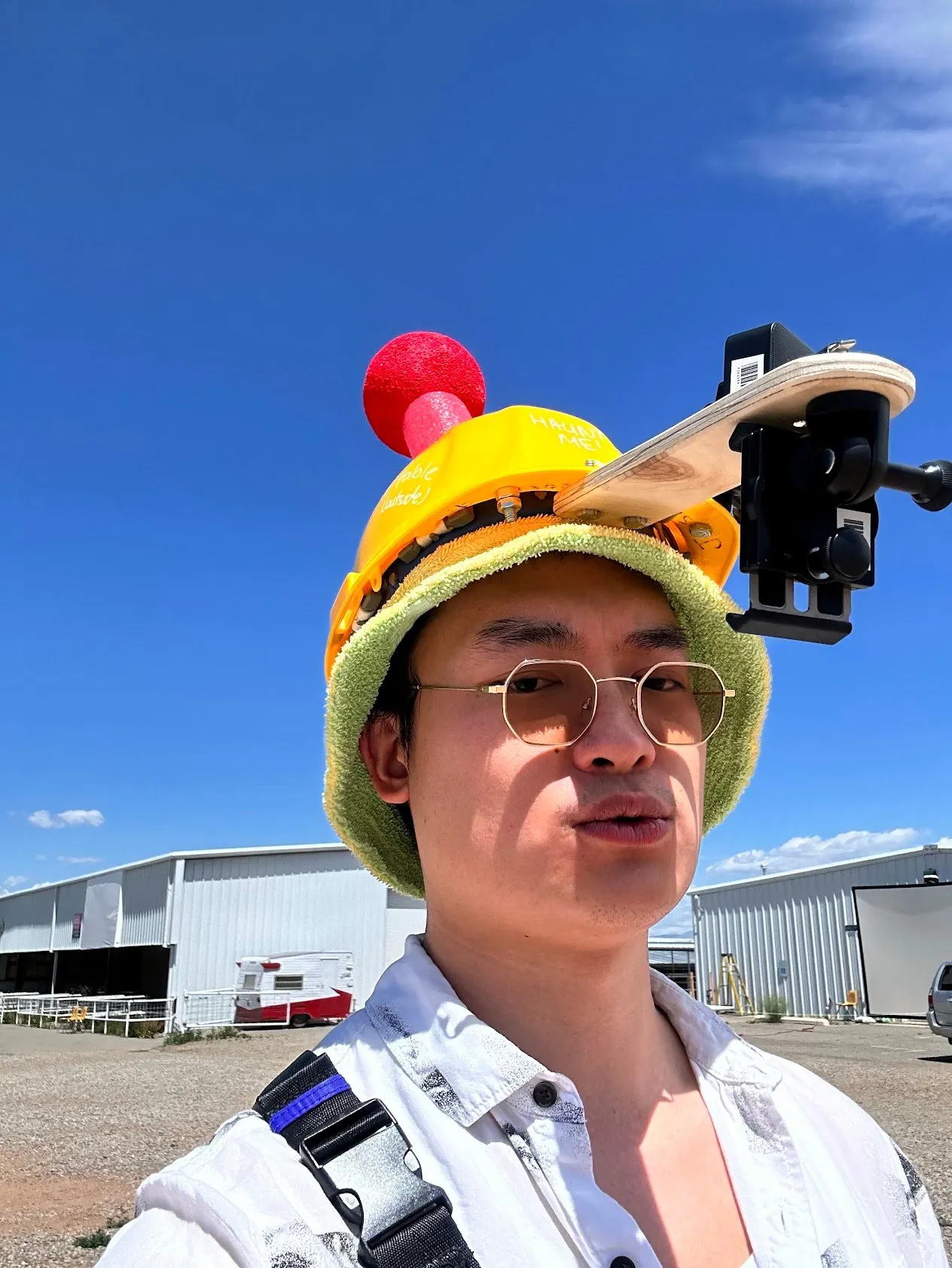
First we wanted to figure out the best form factor. We were thinking harmonica holder, helmet, or phone case.
We prototyped with things around us to get a sense of scale and comfort. Helmet inspired by our friend's project.
 |  |  |
The best feedback we got with these early ideas was:
"You should really ask yourself whether the phone is an add-on to your device, or if the device is an add-on to your phone"
A helmet felt more like the phone is an add-on to it, so we went with the phone case idea!
The pendulum
We were going to have the lipstick on a conveyor belt go in an oval around the mouth, but we realized that it made more sense for it to be on a pendulum.
Then, you get a smile shape AND it's more reminiscent of a clock, time being an important aspect of needing to apply your makeup while on-the-go!
The mechanism
Movement #100
We had a very small DC motor and decided to look up mechanisms that translate circular movements into swinging, pendulum motions.
Enter Movement #100 from 507 Movements!
507 Movements is a website that animates every mechanism in Five Hundred and Seven Mechanical Movements, a catalog Henry T. Brown published back in 1868. It is an absolutely incredible resource: cams, ratchets, escapements, linkages, all the ways humans have figured out how to turn one kind of motion into another. Number 100 is listed as "quick return crank motion, applicable to shaping machines," which is a very industrial way of describing a lipstick that boops you in the face.
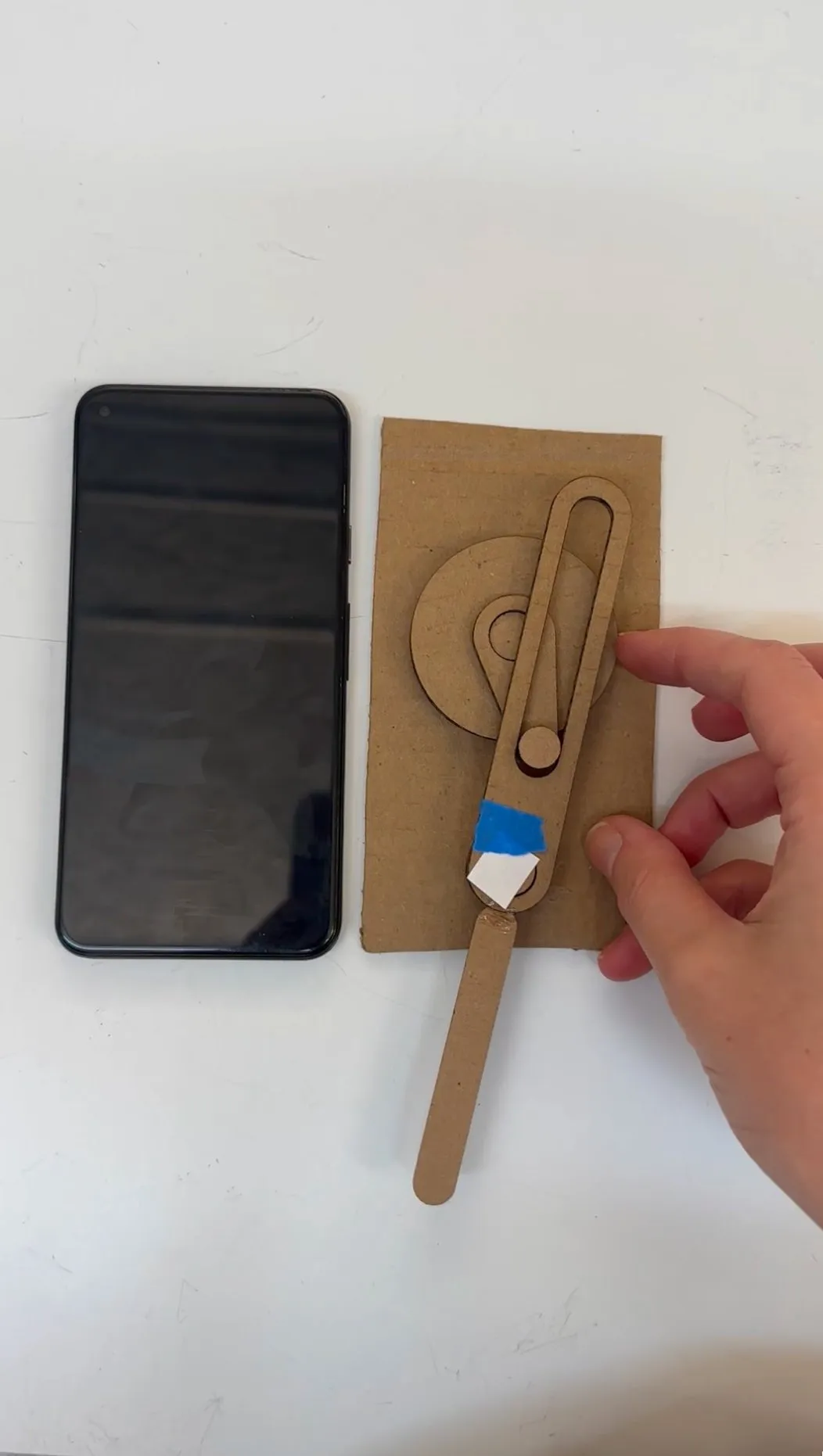
Paper prototyping
I studied computer science and human-computer interaction and have had a career entirely on a computer, so I wasn't that familiar with building mechanisms.
So it was time to paper prototype this mechanism! Let the late nights begin...
Which, to be fair, had already begun a week earlier:
Scale and positioning
Now that we understood the mechanism, we had to understand the scale and positioning.
How large should the mechanism be? How far is the person's face from the phone? What angle does the phone have to be? How do we get the lipstick in there?
So many questions! More prototyping!
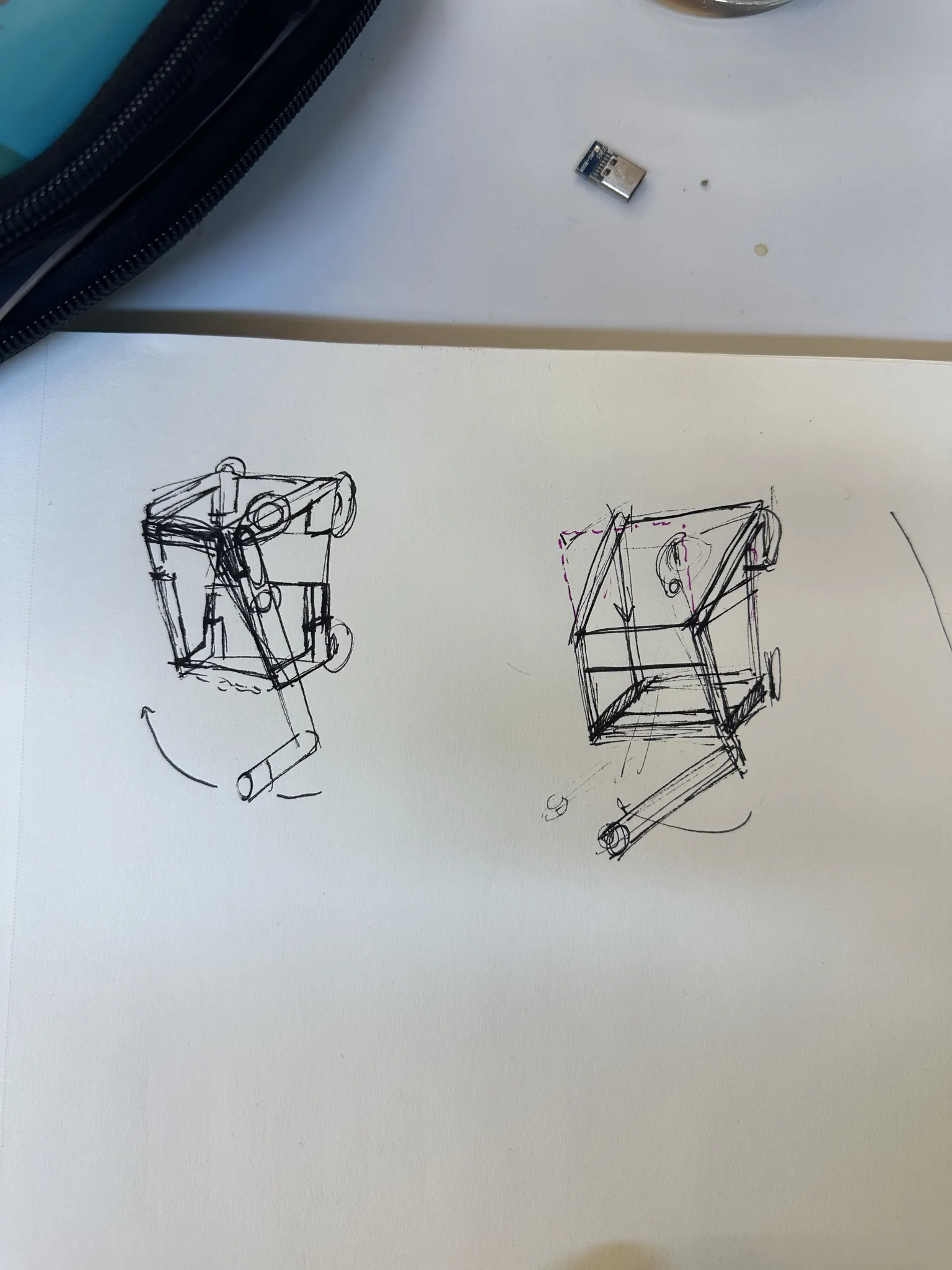
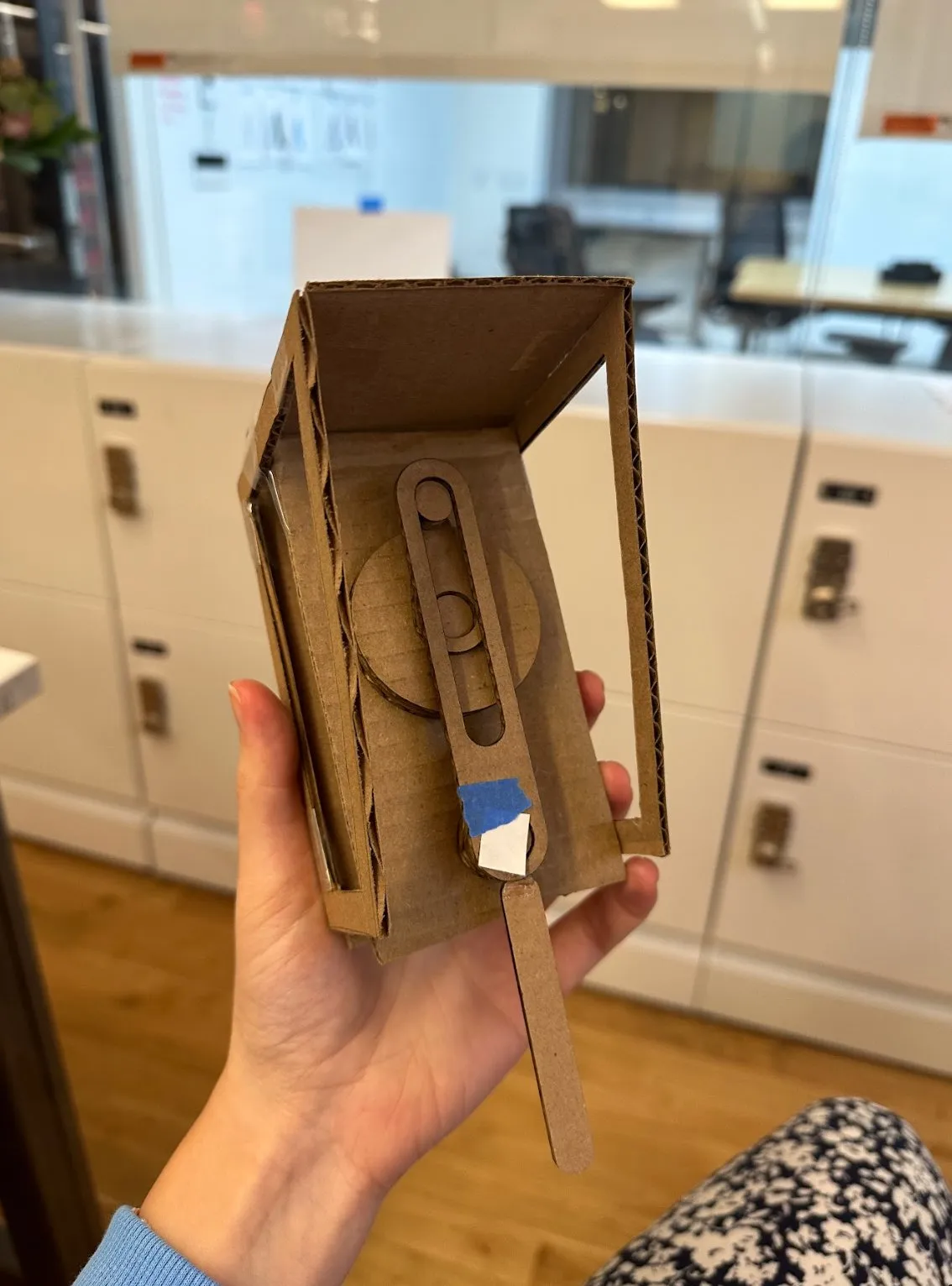
Sketches to cardboard
Once we'd established the positioning and general scale, we had to establish the form!
Sketched some things and translated to cardboard.
Because it would hang with suction cups onto glass and we wanted the pendulum to be visible, making it a hollow frame made the most sense.
 |  |  |
Power
Before we could even move on, we needed to figure out how to power the motor with the phone!
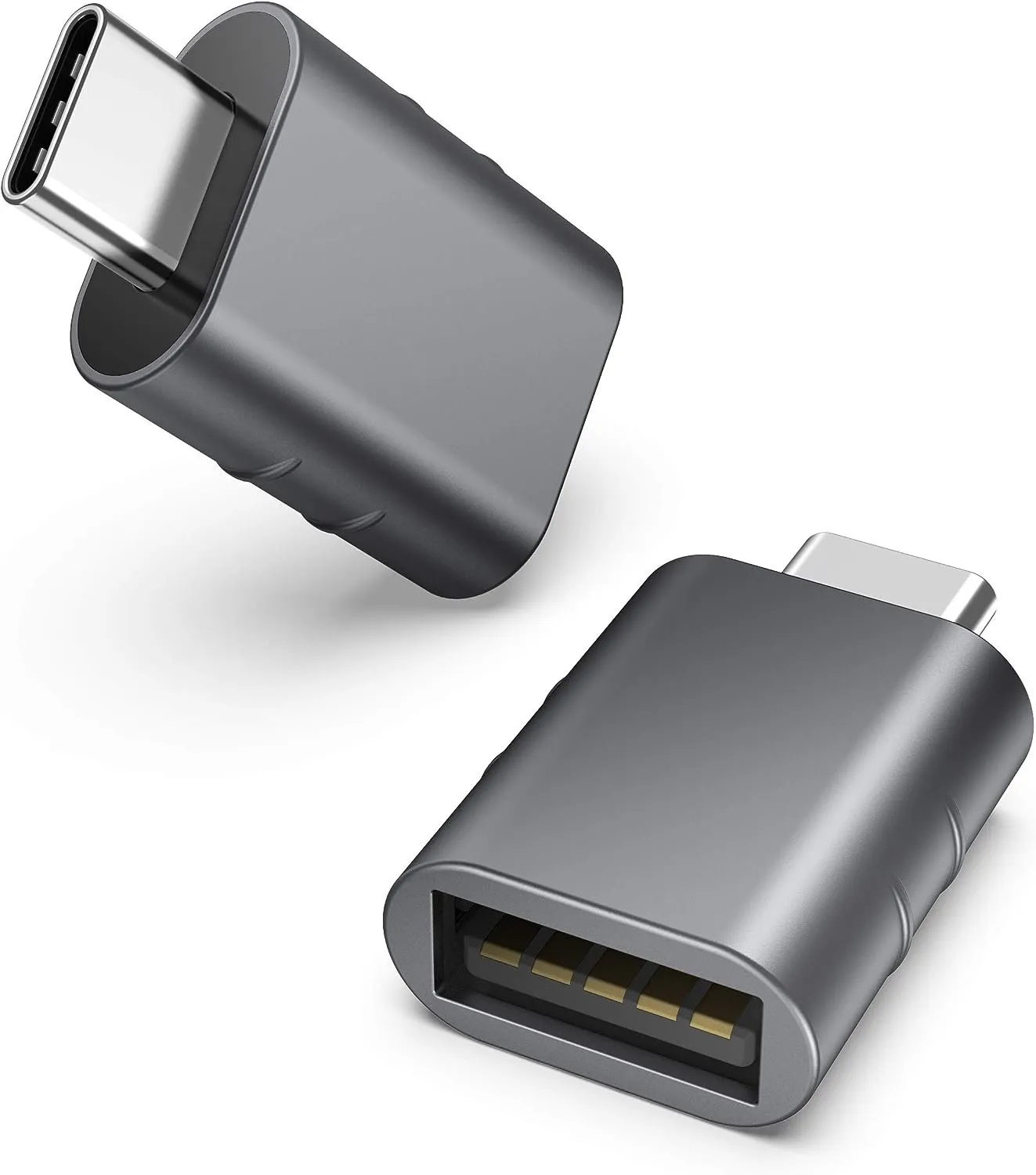
In order to have a phone act as host and provide power, you have to ensure the cable you get supports the USB On-The-Go specification.
Normally your phone is the peripheral. You plug it into a laptop and the laptop is the one in charge, providing the power and deciding what's going on. OTG flips that, letting the phone act as host and supply power to whatever you plug into it. The catch is that the cable has to declare it, so an OTG adapter isn't just wires passing straight through.
Naturally, I bought a bunch of USB Type Cs with breakout boards.
Stupidly, some of the ones I bought were sockets/female, so unusable for this, and the rest did not support the OTG spec.
Efffff.
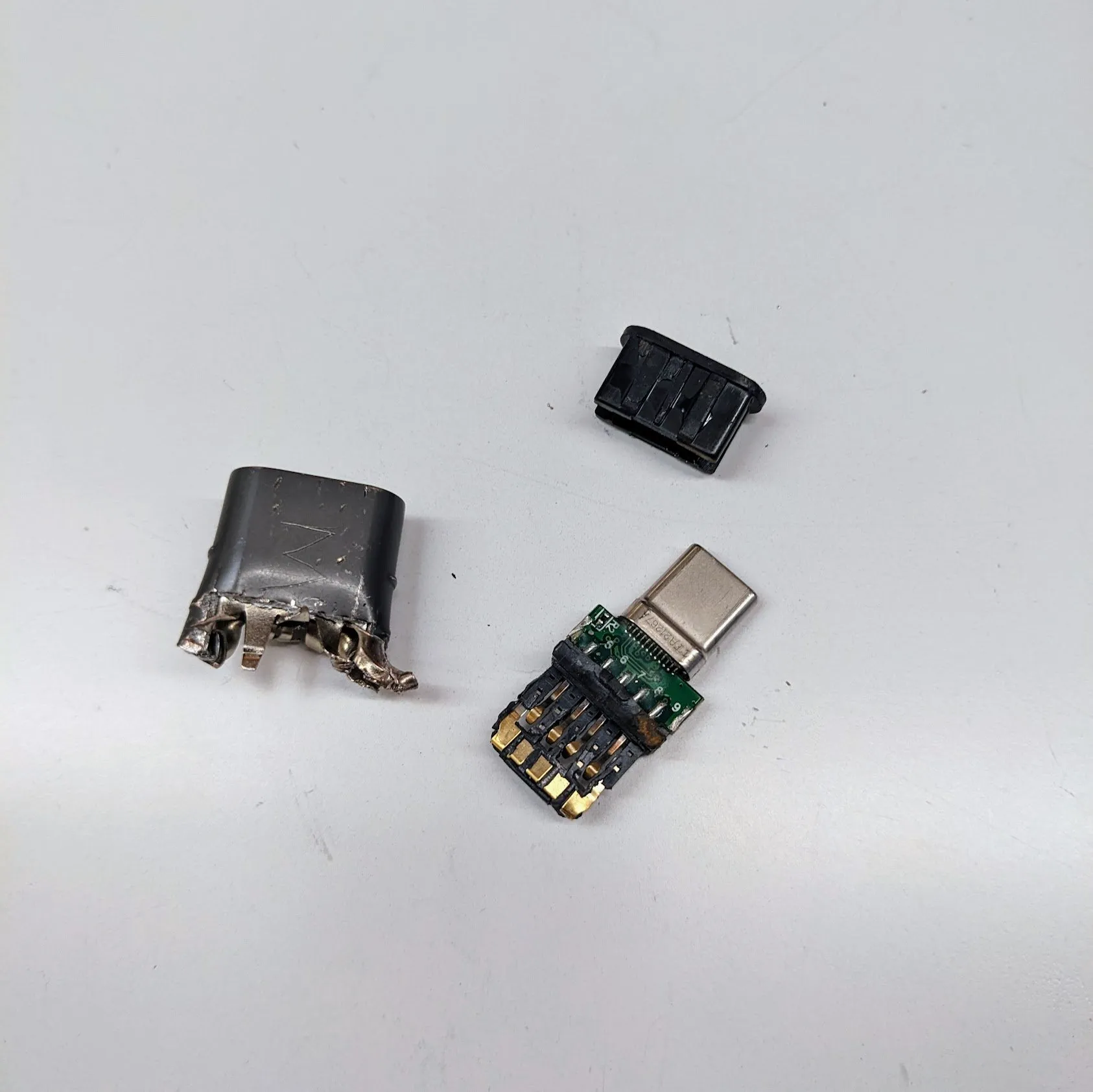
Well, time to take apart one of my adapters that I know does and use that!
 |  |
CAD and printing
Round one
Once I extracted what I needed from my USB adapter (rip) and soldered on the wires I needed (just VCC and GND for this), I turned my eyes to modeling in CAD with the intention of using 3D printing and laser cutting for our final prototype.
Round one of modeling here we go!
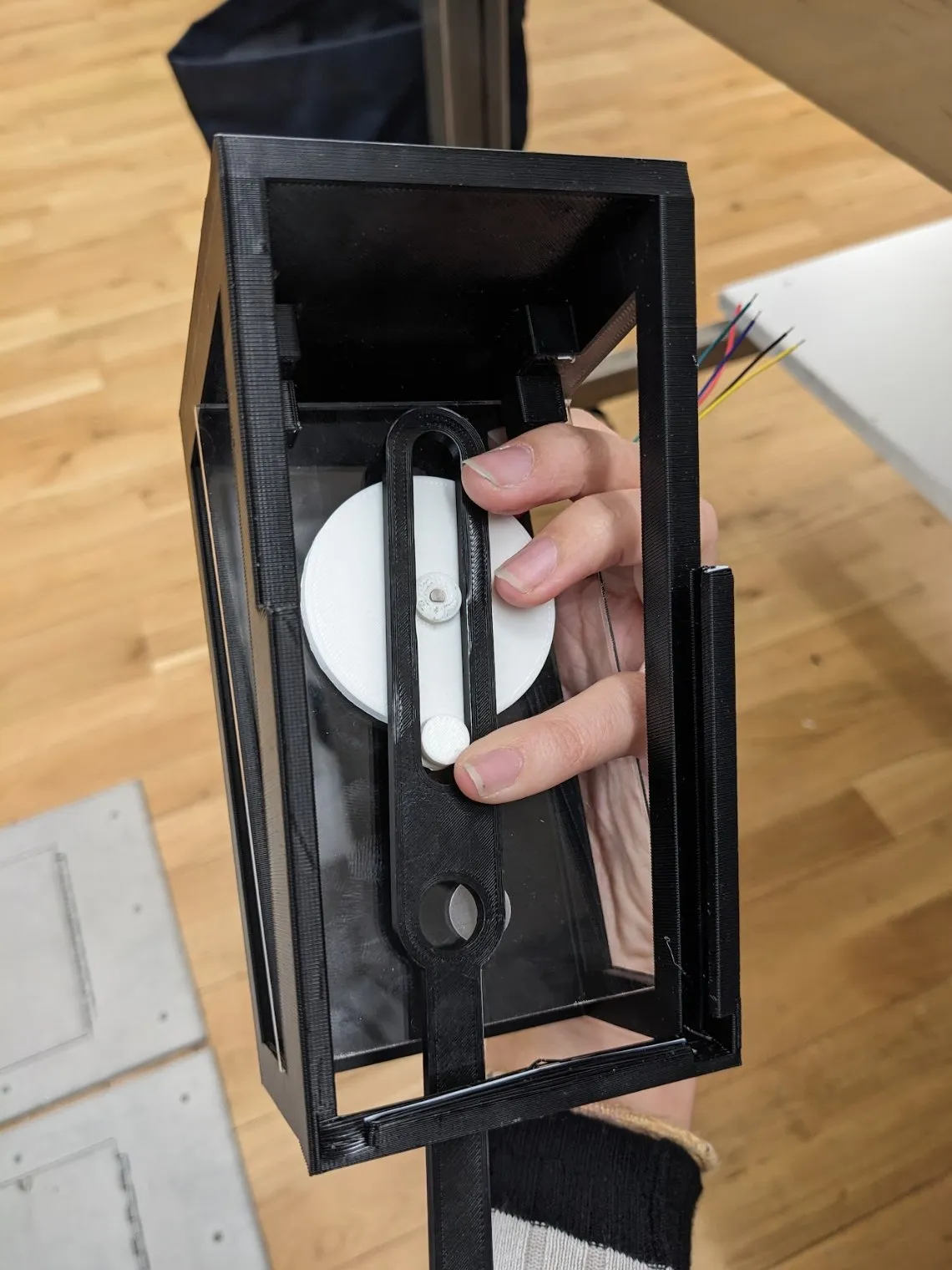
Don't judge me too hard, but the first frame was printed in one go instead of parts. I didn't want to spend the time to figure out how everything fits together and did the print overnight to just get the sense of sizing, weight, etc.
Cut the center shelf with clear acrylic.
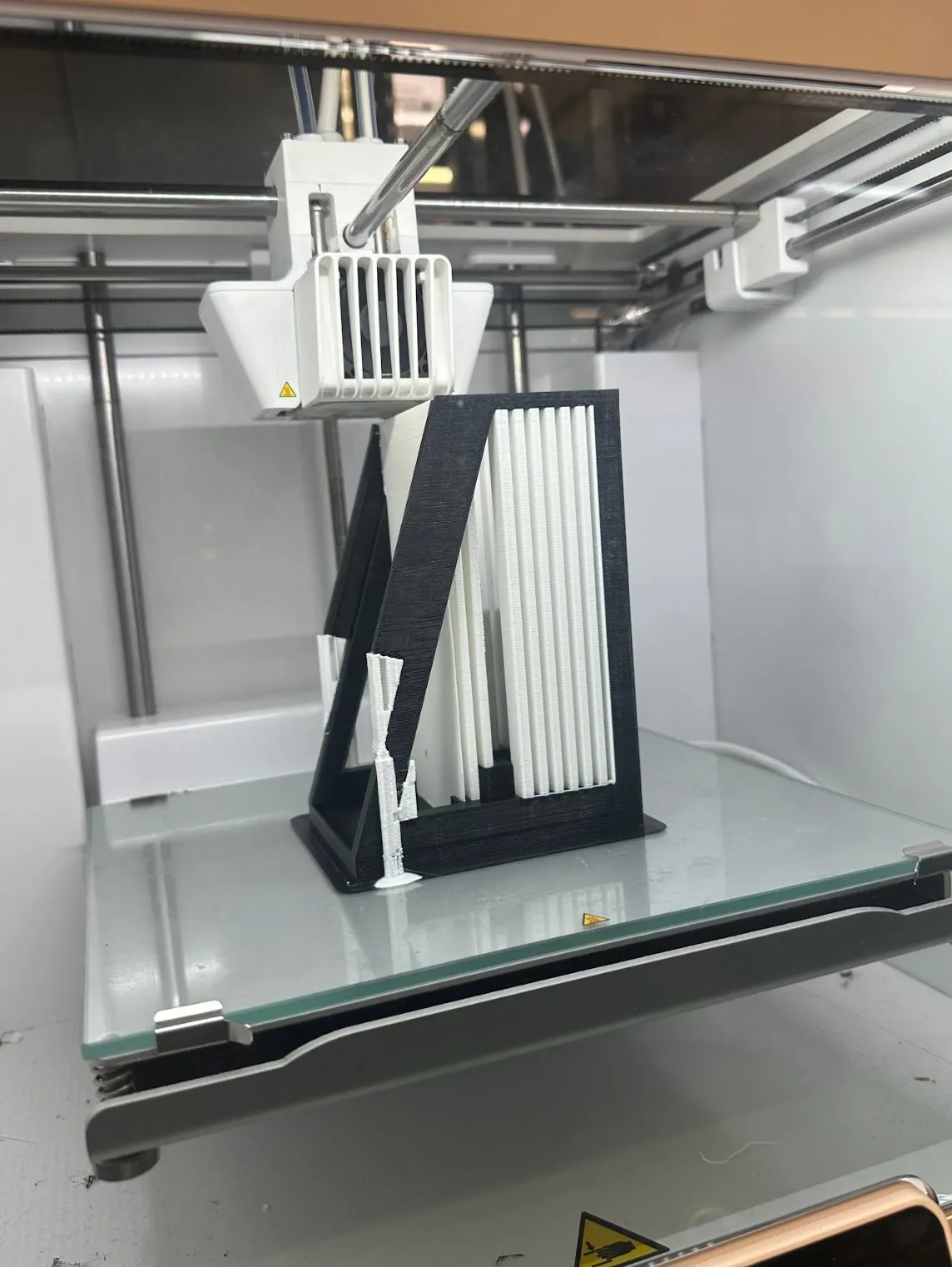 | 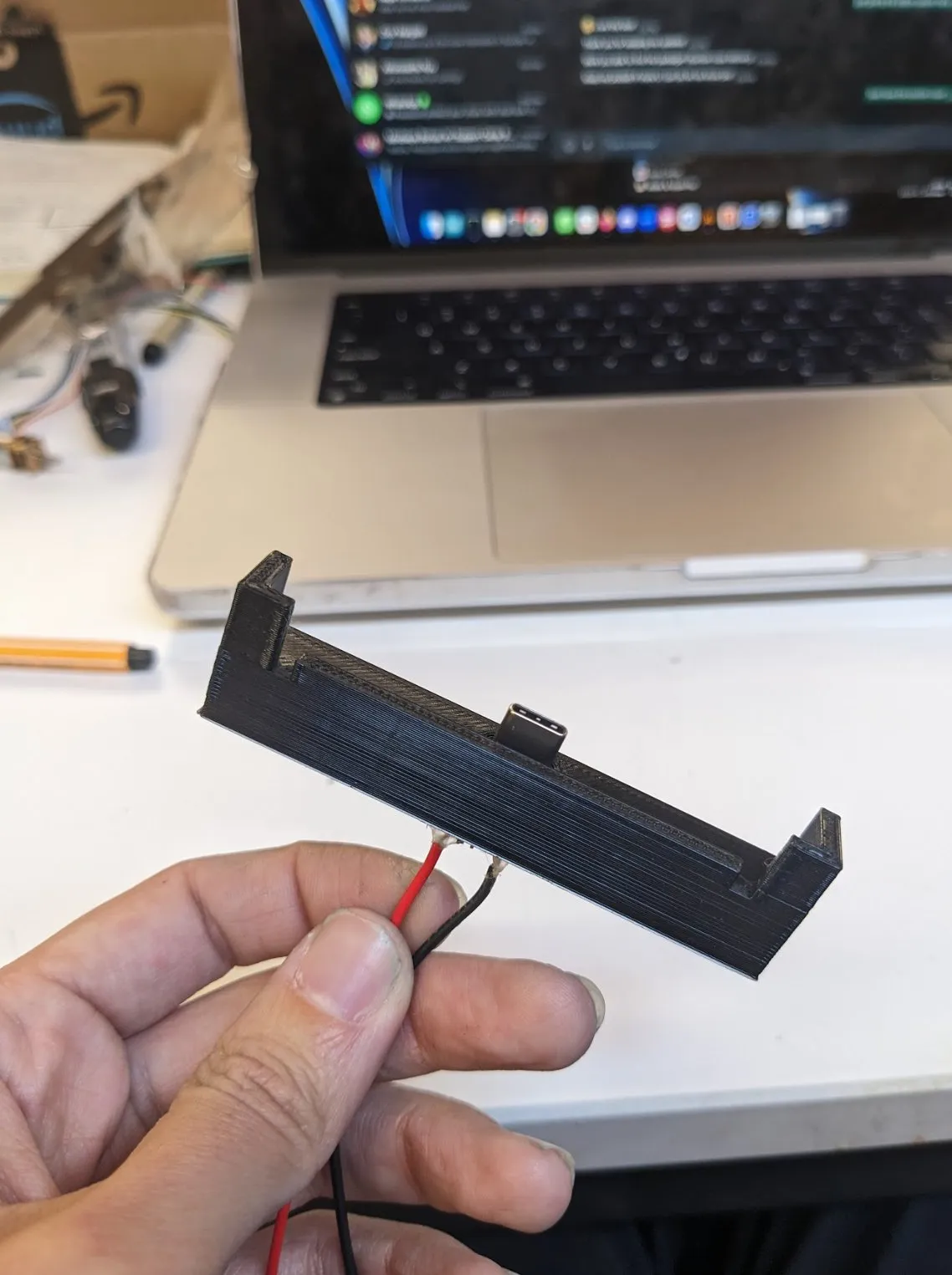 | 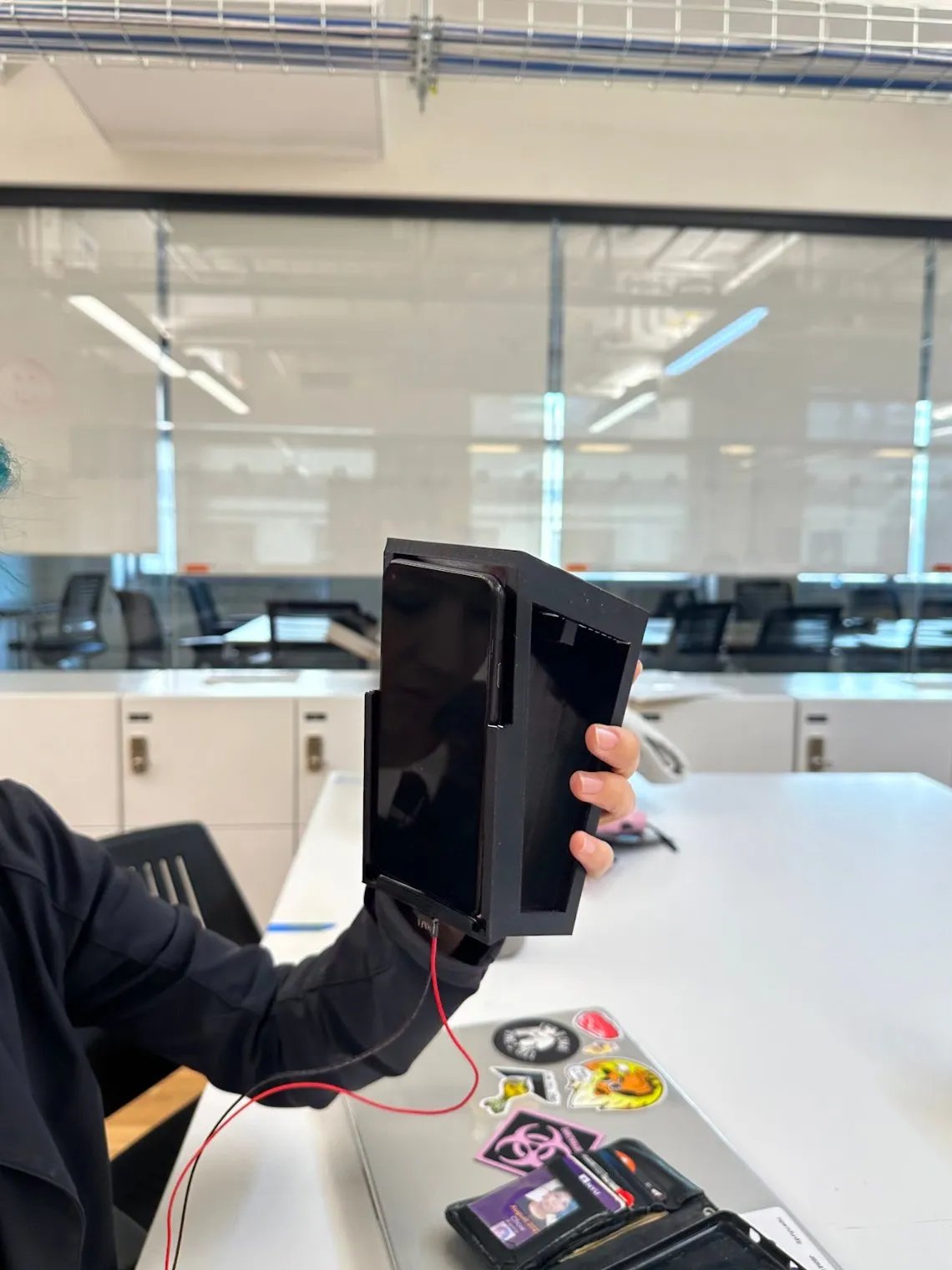 |
This was all done without knowing yet where to put the motor or exactly where the shelf for the pendulum should be.
Now with it physically in our hand with a fast and messy print, we could figure that stuff out.
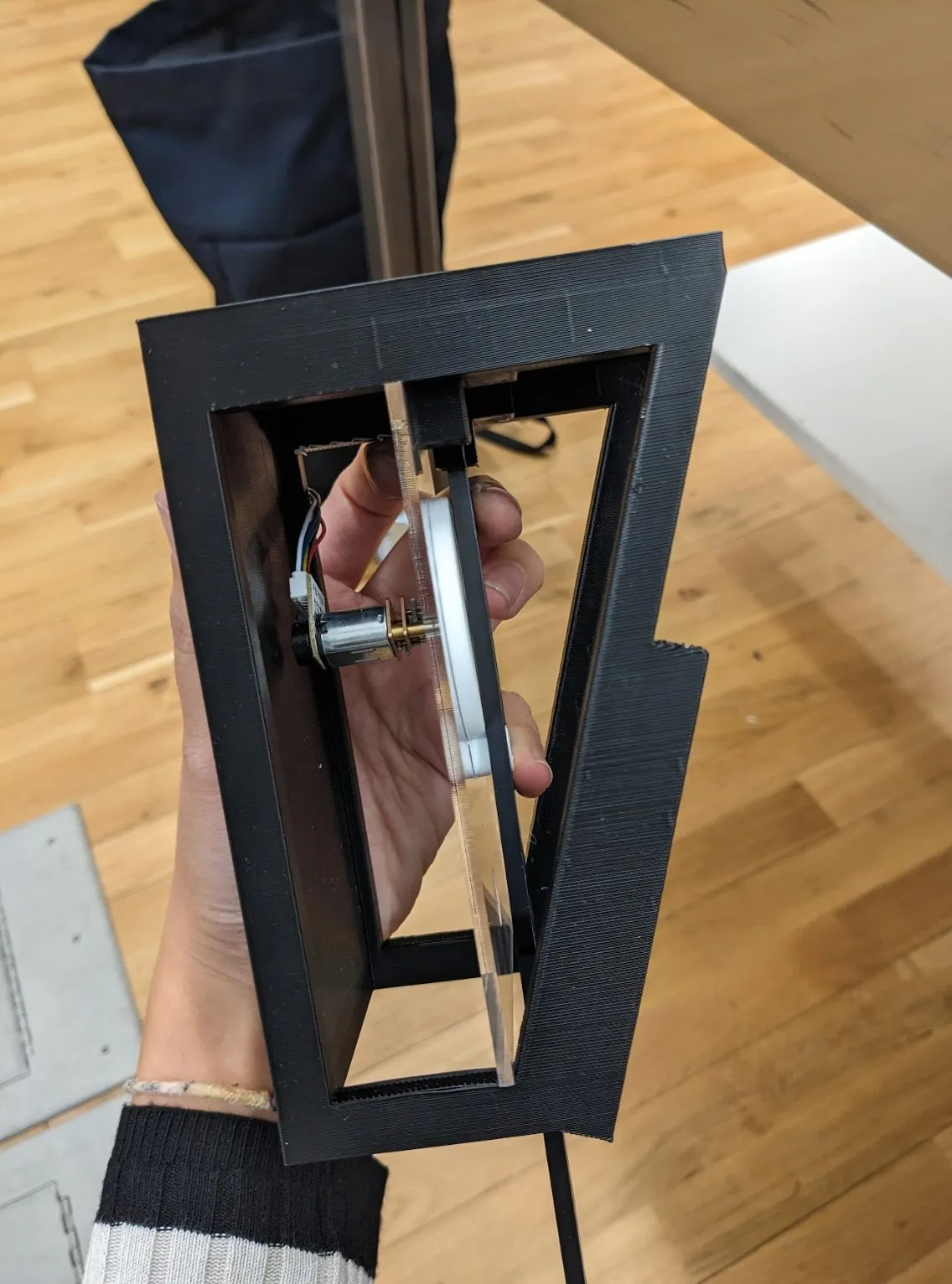 |  |
Motor clearance
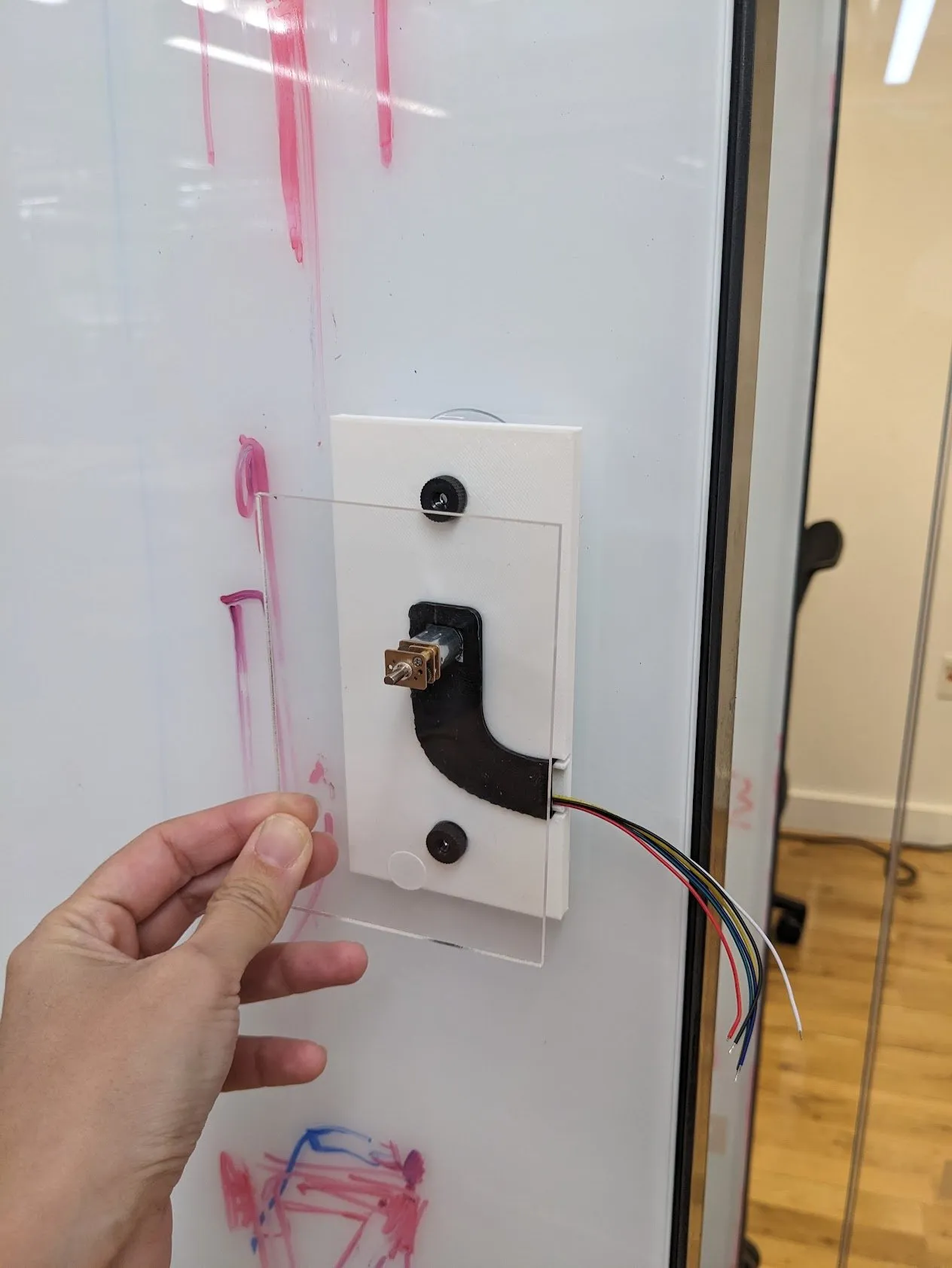
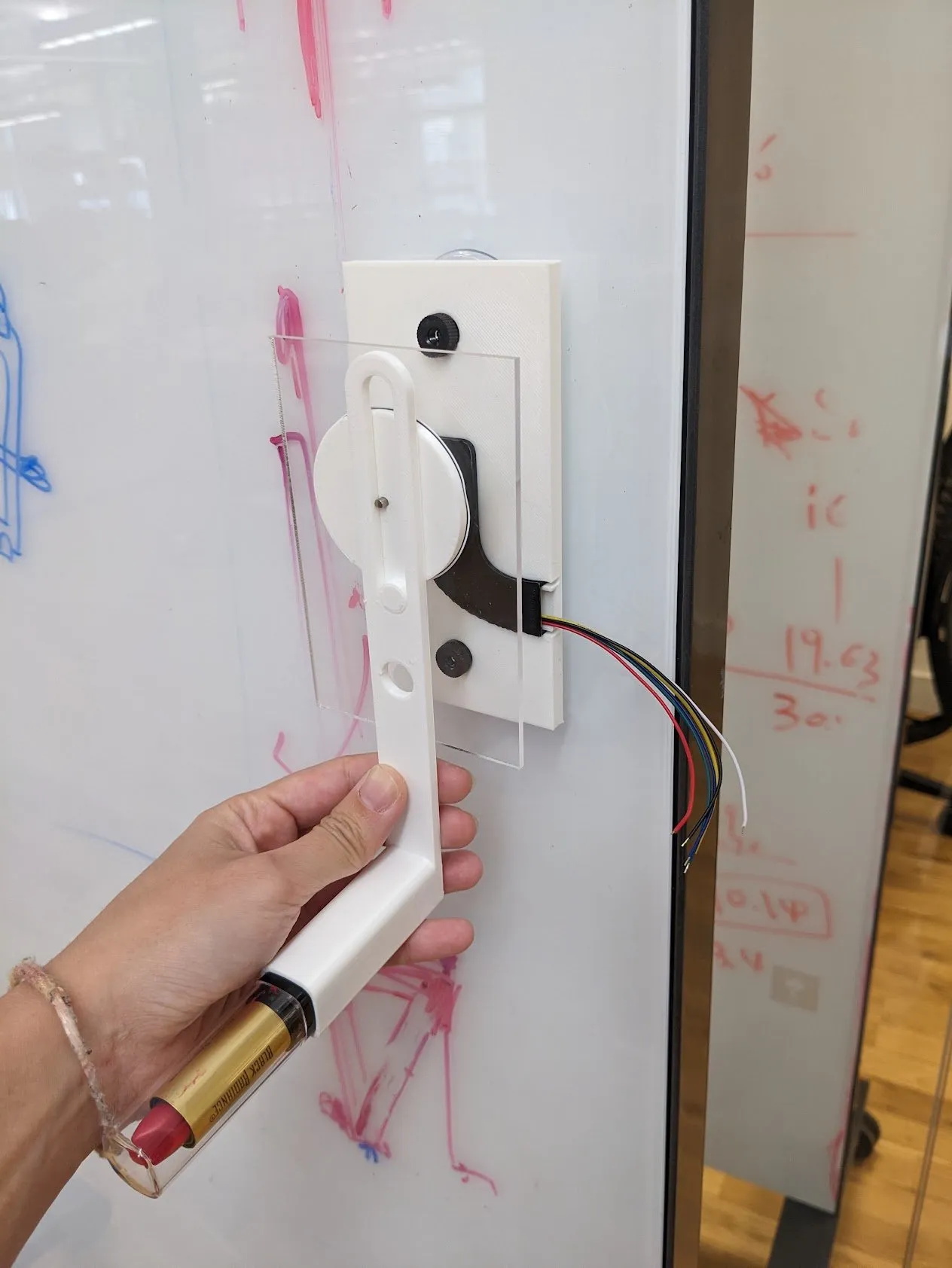
The other annoying thing was that it turned out the motor needed quite a bit of clearance, because the back rotates as well as the spindle. You can't simply just mount it as-is to the back of the frame.
With that new information, back to CAD we went!
NGL the motor and suction cup mounts look pretty goooodddd!
Also, always nice to hide some wires!
 |  |
Printing in parts
Finally! Time to model and print in parts!
The sides have a slot for the backing and top, and the front clamps around the sides. The USB hub has a cavity for the wires and a hole to pass the wires to the motor. Not bad for 6am sleep deprived Karina!
The final
That's pretty much it!
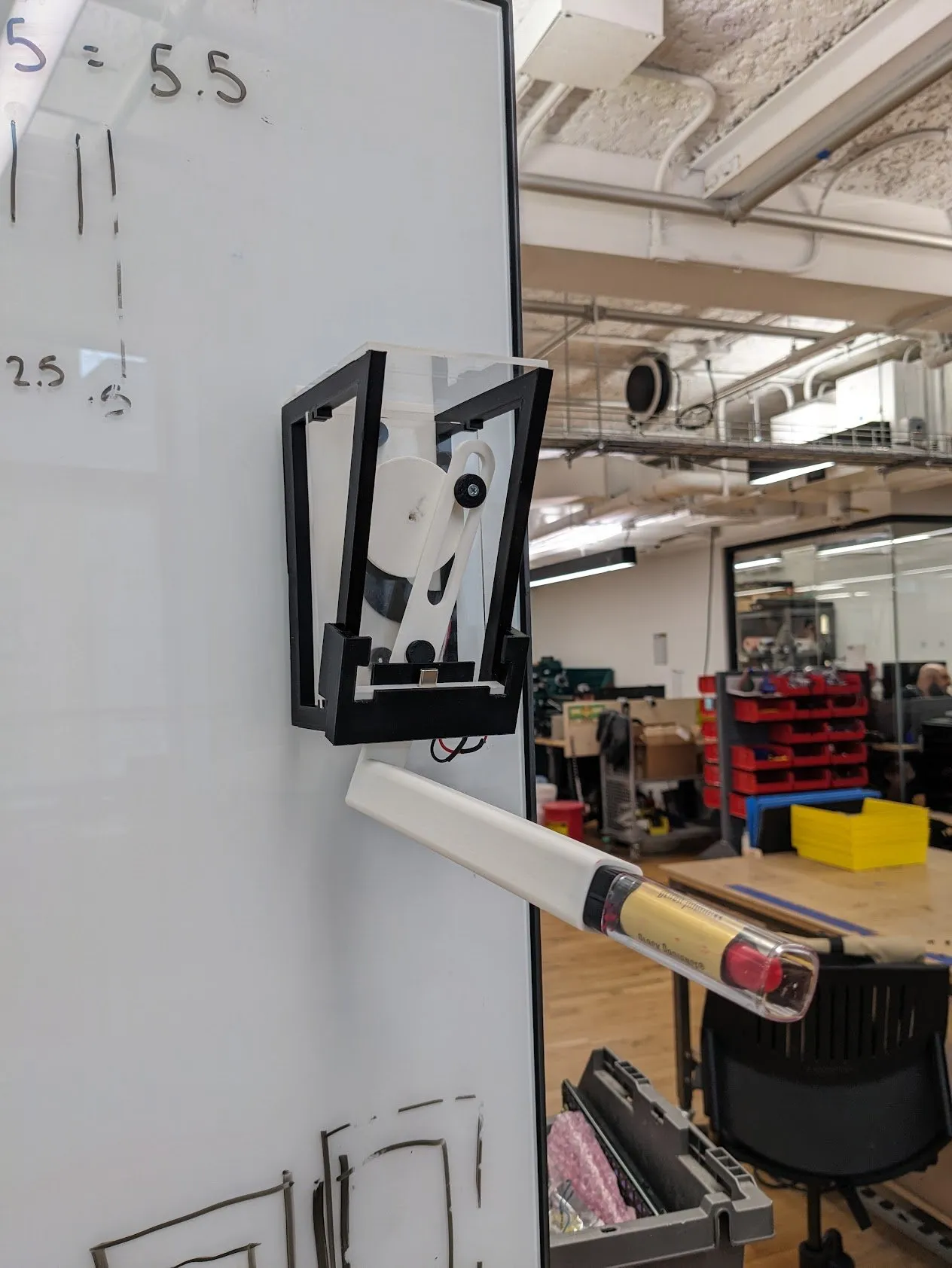
| It was originally going to have a switch to turn on, but the parts got lost in the mail (hence the exposed wires).There's things I would do differently with the design, but overall I'm happy with it! Definitely a fun and absurd project! |
 | 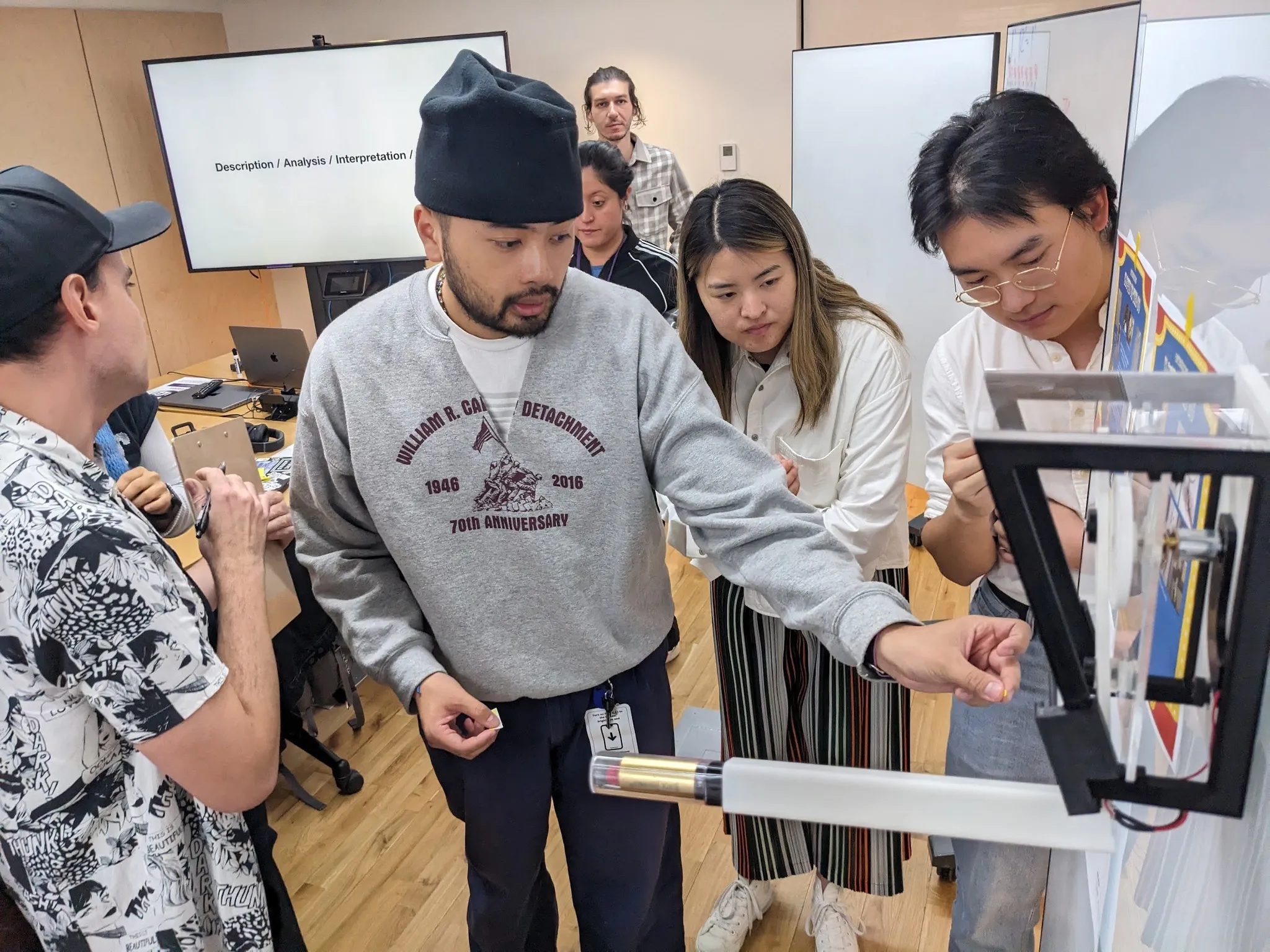 |  |
My classmates had to rate how absurd the project was.
Part of the purpose of the project was to engage in "absurd thinking".
Damn. Next time, I apparently have to "think" more absurdly!
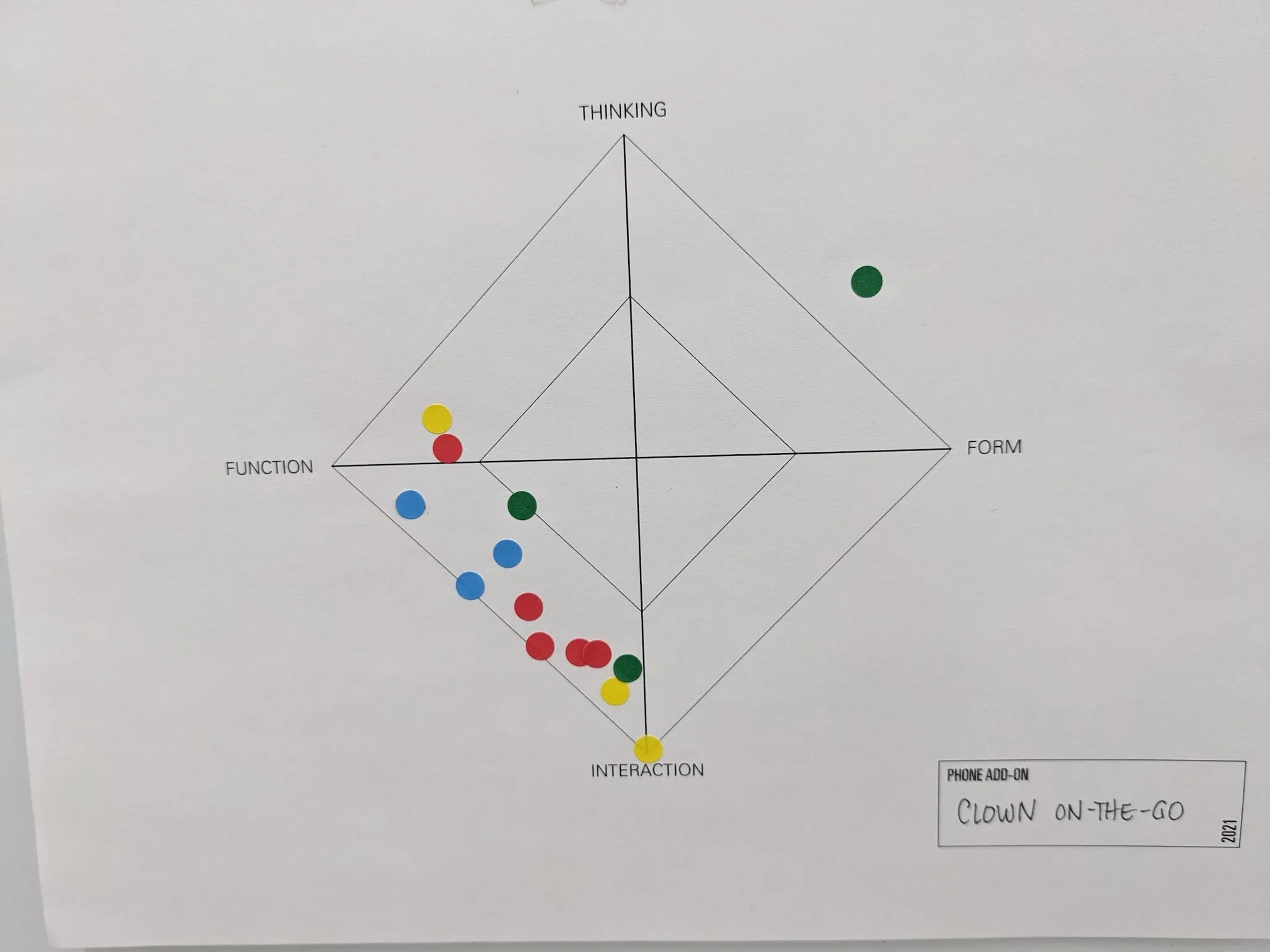 |
The chart has four corners: thinking, form, interaction, and function. Everyone got dots to place, and the cluster came out low and to the left, closer to function than to thinking. Which is a very polite way of being told that your lipstick catapult was, if anything, a little too reasonable.